Co2, Temperature, Humidity & Pressure Sensor based on Lora

The 4-in-1 LoRa Agricultural Co2 Sensor delivers accurate CO₂, temperature, humidity, and pressure data in a single device. Its long-range LoRa connectivity (up to 3 km) ensures reliable monitoring even in remote greenhouse areas. Built for durability and long-lasting battery operation. It provides essential climate insights with minimal maintenance. The Co2 Sensor is helping growers optimize plant health and improve overall crop performance.

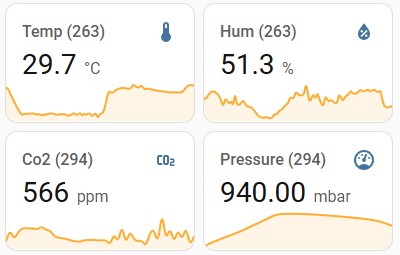
Co2 Sensor Data Charts
Co2-Carbondioxide-Sensor

Adapt to survive

TypeCO₂ sensor
UseEnvironmental Monitoring
Mounting TypeWall mount
Description3 in 1 wireless CO2 sensor
Measured ParametersTemperature, Humidity, Co2
SeriesLoRa sensor
Place of OriginChina
OutputDigital
Temperature Range-40~65°C
Humidity Range0~100%
CO2 Range300–2000 PPM / 300–5000 PPM / 0–25 vol%
Communication ModeLoRa
Communication Distance5 KM (line of sight)
Battery Life12 months @ 30-minute intervals
Power SupplyBattery powered (replaceable)
Single Package Size10 × 10 × 5 cm
Single Gross Weight0.450 KG
Battery: ER26500 Li-SOCl2 battery

Co2 Sensor Features and Data

  • Long Range (LoRa)

    up to 3km Line of Sight. Measure where you need it-

  • Indoor, Outdoor CEA

    Designed for rush outdoor conditions as well as Closed Environment Agriculture (CEA)

  • Plug n Measure

    100% Compatible and Integrated with the j-tec Appliance

Advantages of measuring Co2 in horticulture

LoraWAN Net
j-tec-dashboard-homeassistant

Why CO₂ Monitoring Matters for Modern Greenhouse Farming

Boost yield and reduce costs with precise CO₂ enrichment

CO₂ enrichment can significantly increase photosynthesis and improve yields when handeled correctly. By measuring the actual CO₂ level in your greenhouse and combining it with climate data, you can dose CO₂ far more accurately. This prevents overdosing, lowers operating costs and helps you understand the real yield benefits of your CO₂ strategy.

Adapt Harvest Planning to Rising Global CO₂

As global CO₂ levels continue to increase and climate conditions shift, plant growth rates can change in unexpected ways. By tracking CO₂ in your greenhouse and combining it with crop-growth and temperature models, you gain clearer predictions of development and maturity. This makes it easier to time harvests, organise labour and stay prepared for climate-driven fluctuations.

Achieve more stable growing conditions with climate-focused control

Using CO₂ Sensor-levels together with VPD and temperature creates a more accurate picture of plant demand. This enables climate control systems to keep conditions inside optimal ranges, reducing plant stress and promoting healthier, more uniform growth.

Reduce energy waste by controlling ventilation more intelligently

With CO₂-based ventilation analysis, you can evaluate how well air moves through your greenhouse. This allows you to fine-tune fan schedules, avoid unnecessary air exchange during CO₂ enrichment and keep more of the added CO₂ inside, saving both energy and input costs.

Identify stress and diagnose plant problems sooner

Night-time CO₂ accumulation and changes in respiration patterns can provide early warnings of crop stress or root issues. This gives growers an additional diagnostic tool to support healthy crop development.
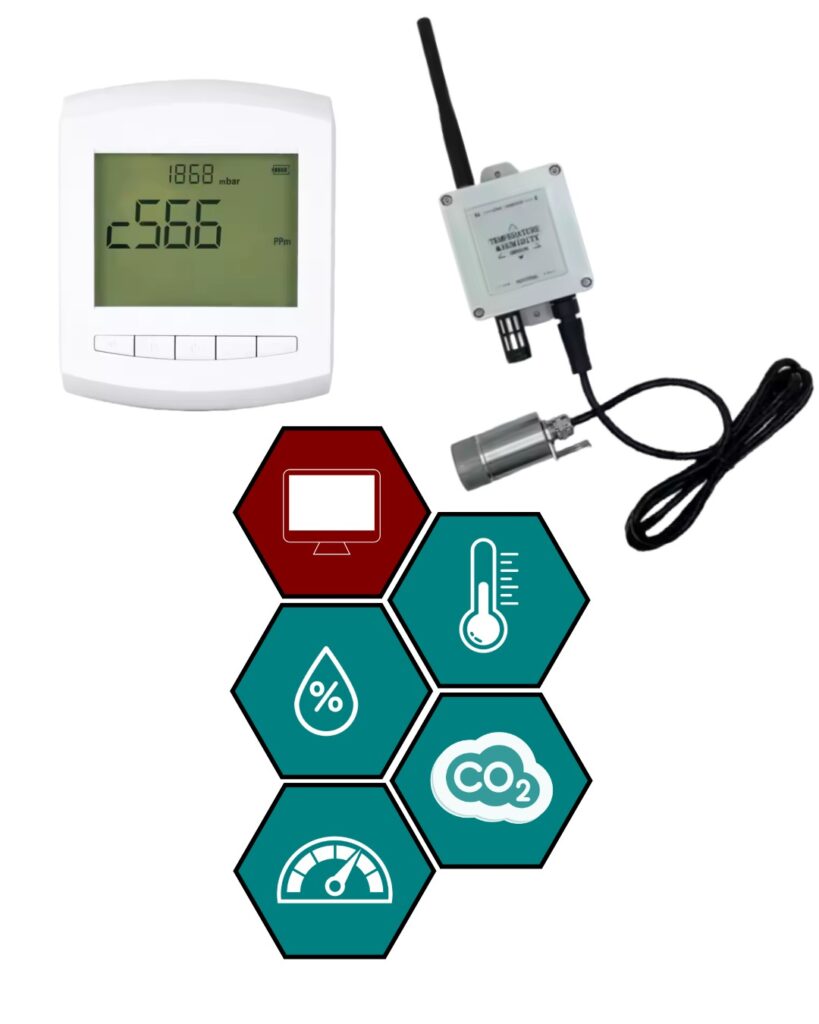
What can be calculated from temperature and humidity?

Because the CO₂ (4-in-1) sensor also measures temperature and humidity, you get all features from the 2-in-1 model  + More and Better!

More Accurate Humidity & VPD

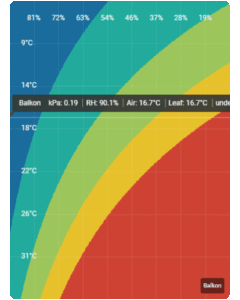
Air pressure improves humidity, dew-point and VPD calculations, reducing errors in climate control.

Applying local atmospheric pressure to humidity calculations directly enhances the accuracy of dew-point and Vapor Pressure Deficit (VPD) data.

This produces more reliable condensation alarms and precise VPD readings, which are fundamental for managing irrigation and plant transpiration in controlled agricultural environments.

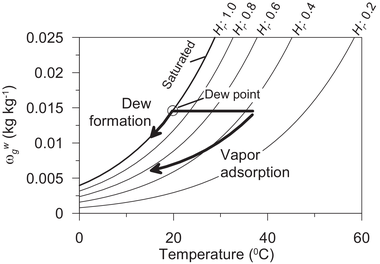
Dew formation and water vapor adsorption in a psychrometric chart developed by Carrier
https://www.researchgate.net/figure/Dew-formation-and-water-vapor-adsorption-in-a-psychrometric-chart-developed-by-Carrier_fig1_340369629
VPD-Vapour-Pressure-Defizite
LORAWAN Temperature Humidity Sensor

What You Can Calculate With CO₂, Temperature, Humidity and Air Pressure

  • CO₂ Pressure Instead of ppm
    Convert ppm into partial pressure for more accurate growth and photosynthesis models.

  • Better Photosynthesis Estimates
    Use CO₂, temperature and pressure to calculate how much CO₂ leaves actually fix. Helps compare crop performance across days and seasons.

  • Stomatal Response & Gas Exchange
    Combine CO₂, VPD (from temperature + humidity) and light to estimate stomatal opening. Shows how plants balance CO₂ uptake and water loss.

  • Canopy Productivity (GPP)
    Upscale leaf CO₂ uptake to whole-canopy production using leaf area. Useful for tracking daily biomass gains.

  • Water Use Efficiency (WUE & iWUE)
    Estimate how much water the crop spends for every unit of CO₂ gained. Helps optimise irrigation and climate steering.

  • Ventilation Rate (ACH)
    Use CO₂ decay to measure how quickly air is exchanged. Detects poor airflow and inefficient ventilation settings.

  • More Accurate Humidity & VPD
    Air pressure improves humidity, dew-point and VPD calculations, reducing errors in climate control.

  • Night Respiration Signals
    Night-time CO₂ patterns help spot stress, root issues or early decline before symptoms appear.

  • CO₂ Enrichment Efficiency
    Track how much added CO₂ is actually used. Helps detect leaks, reduce waste and cut operating costs.

Sources