In today’s rapidly evolving agricultural sector, technology plays a crucial role in improving efficiency, reducing waste, and maximizing yields. Farmers, horticulturists, and floriculturists need reliable, low-maintenance solutions to monitor environmental conditions without the hassle of complex setups or high energy costs. That’s where LoRaWAN sensors come in—a game-changing wireless technology designed for long-range, low-power IoT applications.
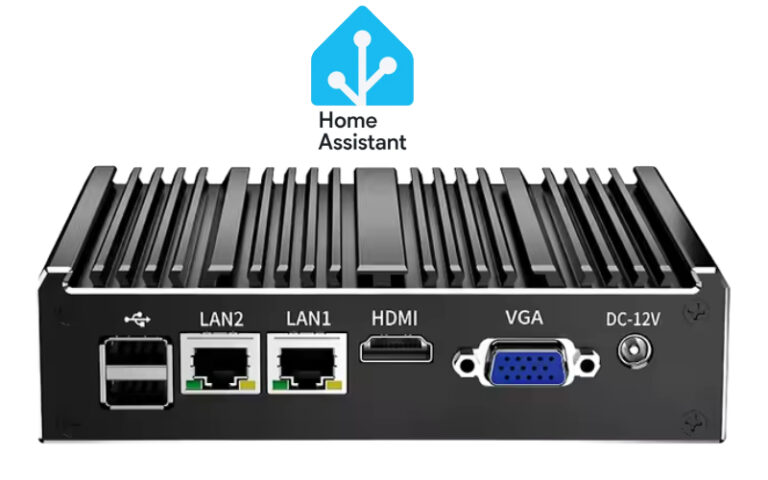
At j-tec, we specialize in providing industrial mini servers preinstalled with Ubuntu and Home Assistant OS, along with LoRaWAN-based environmental sensors, to help you automate and optimize your farming operations. But what makes LoRaWAN the ideal choice for smart agriculture? Let’s dive in.
What Is LoRaWAN?
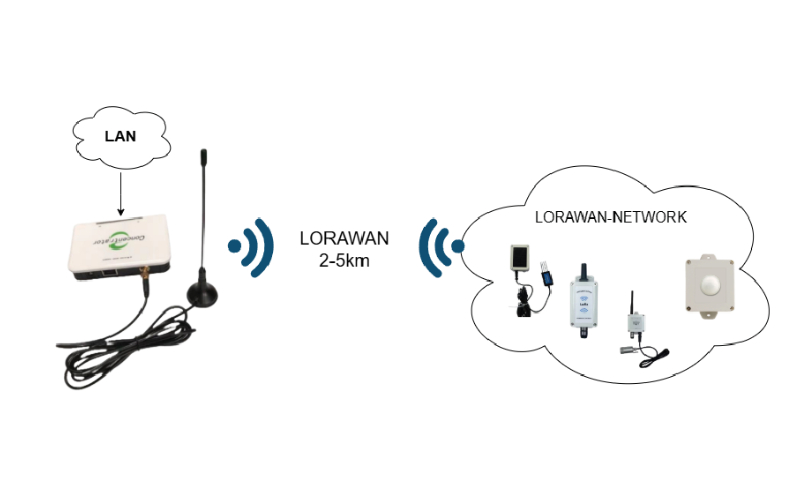
LoRaWAN (Long Range Wide Area Network) is a low-power, long-range wireless communication protocol specifically designed for IoT (Internet of Things) devices. Unlike Wi-Fi or Bluetooth, which are great for short-range, high-bandwidth applications, LoRaWAN excels in transmitting small amounts of data over kilometers while consuming minimal energy.
- Long Range: Signals can travel 5-15 km in rural areas, making it perfect for large farms and greenhouses.
- Low Power: Sensors can run for years on small batteries, reducing maintenance.
- Scalability: A single gateway can support thousands of sensors, allowing comprehensive monitoring.
- Secure & Reliable: Built-in encryption ensures data integrity and protection.
- Cost-Effective: Lower infrastructure costs compared to cellular IoT solutions.
Why LoRaWAN Sensors Are Perfect for Agriculture
1. Real-Time Environmental Monitoring
Farmers and greenhouse operators need precise data on:
- Temperature & Humidity – Ensures optimal growing conditions.
- Soil Moisture – Prevents over/under-watering, saving water and improving yields.
- Light Levels – Helps manage shade systems or supplemental lighting.
- CO₂ Levels – Critical for greenhouse climate control.
With LoRaWAN sensors, you can monitor all these parameters in real-time and receive alerts if conditions deviate from the ideal range.
2. No Wi-Fi? No Problem!
Many farms and greenhouses are located in areas with poor or no Wi-Fi coverage. LoRaWAN operates on license-free radio frequencies (e.g., 868 MHz in Europe, 915 MHz in the US), meaning you don’t need internet connectivity at each sensor location. Data is transmitted to a central LoRaWAN gateway, which can then send it to your Home Assistant dashboard or cloud platform.
3. Energy Efficiency = Less Maintenance
Since LoRaWAN sensors consume very little power, they can operate for years on a single battery. This is a huge advantage in remote agricultural settings where frequent battery replacements would be impractical.
4. Scalable & Future-Proof
Whether you’re monitoring a small greenhouse or a vast open field, LoRaWAN scales effortlessly. You can start with a few sensors and expand as needed—all connected to the same gateway.
How Our Industrial Mini Server Enhances Your LoRaWAN Setup
Our industrial mini server, preinstalled with Ubuntu and Home Assistant OS, acts as the central brain of your smart farming system. Here’s how it works:
- LoRaWAN Gateway Integration – The server connects to a LoRaWAN gateway (either standalone or built-in) to collect sensor data.
- Local Processing with Home Assistant – No need for cloud dependency; all data is processed locally for fast, reliable automation.
- Automated Alerts & Actions – Get notifications if temperatures drop too low, soil dries out, or CO₂ levels rise. Trigger fans, irrigation systems, or heaters automatically.
- Data Logging & Analytics – Store historical data to track trends and optimize growing strategies.
Final Thoughts: A Smarter Way to Farm
LoRaWAN sensors offer unmatched flexibility, efficiency, and reliability for modern agriculture. When paired with our industrial mini server running Home Assistant, you get a fully automated, energy-efficient, and scalable monitoring system—perfect for farmers, horticulturists, and greenhouse operators who want to embrace smart technology without the complexity.